Archives
- 2026-08
- 2026-07
- 2026-06
- 2026-05
- 2026-04
- 2026-03
- 2026-02
- 2026-01
- 2025-12
- 2025-11
- 2025-10
- 2023-07
- 2023-06
- 2023-05
- 2023-04
- 2023-03
- 2023-02
- 2023-01
- 2022-12
- 2022-11
- 2022-10
- 2022-09
- 2022-08
- 2022-07
- 2022-06
- 2022-05
- 2022-04
- 2022-03
- 2022-02
- 2022-01
- 2021-12
- 2021-11
- 2021-10
- 2021-09
- 2021-08
- 2021-07
- 2021-06
- 2021-05
- 2021-04
- 2021-03
- 2021-02
- 2021-01
- 2020-12
- 2020-11
- 2020-10
- 2020-09
- 2020-08
- 2020-07
- 2020-06
- 2020-05
- 2020-04
- 2020-03
- 2020-02
- 2020-01
- 2019-12
- 2019-11
- 2019-10
- 2019-09
- 2019-08
- 2019-07
- 2019-06
- 2019-05
- 2019-04
- 2018-07
-
The causes of POD are complex and not entirely clear
2021-04-02
The causes of POD are complex, and not entirely clear. Androsova et al, believed that the main molecular mechanism of POD is a central cholinergic deficiency caused by deregulation of cholinergic anti-inflammatory pathways leading to increased inflammation. The cholinergic anti-inflammatory pathway,
-
EphB and ephrinB mRNA levels
2021-04-02
EphB4 and ephrinB2 mRNA levels were determined from three parts taken from each tumor, and each sample was analyzed in triplicate. The differences in the histoscores and mRNA levels of EphB4 and ephrinB2 were analyzed by Student's t test. The correlation coefficients were evaluated both by linear re
-
br Chondroitin sulfate proteoglycans CSPGs are major compone
2021-04-02
Chondroitin sulfate proteoglycans (CSPGs) are major components of the extracellular matrix in cartilage. Each CSPG comprises a single core protein and attached chondroitin sulfate (CS), belonging to the glycosaminoglycan family of sugar chains. CSPGs and CS are involved in numerous biological and
-
Taken together this study gives first insights into the
2021-04-02
Taken together, this study gives first insights into the complex effect of DNMT inhibition on pattern separation. Acute administration of RG108 enhanced pattern separation performance measured with the OPS task and increased Bdnf1 expression. However, this effect was only acute, and was not present
-
It is well established that p maintains genomic
2021-04-02
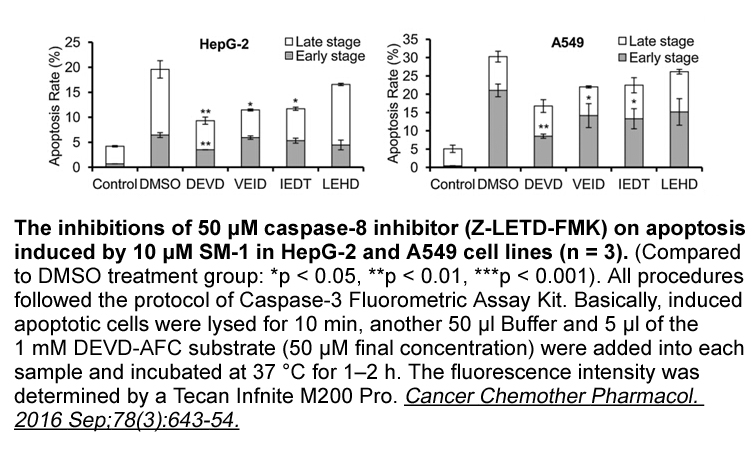
It is well established that p53 maintains genomic integrity in response to a variety of cell stresses including DNA damage and oncogenic stress among others [6], [7], [8], [9]. p53 promotes the expression of several genes to cause GSK2118436 arrest and to repair cellular damage. There is growing ev
-
br Prospect of DDR antagonist
2021-04-02
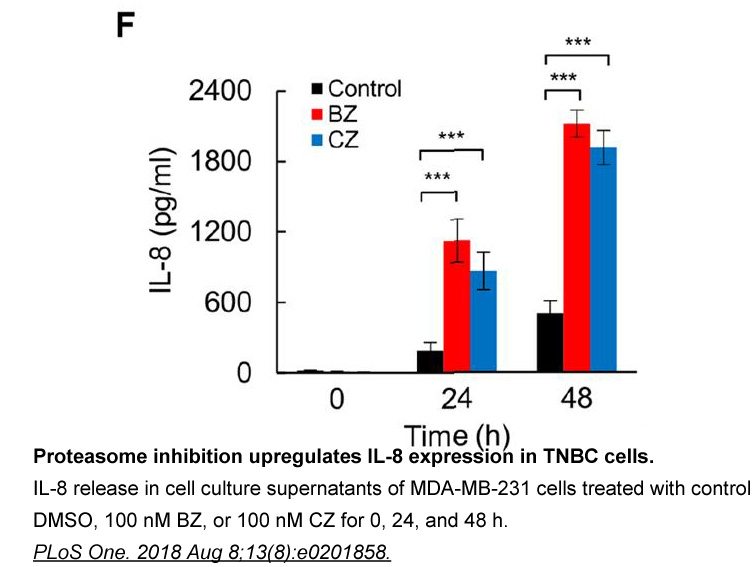
Prospect of DDR2 antagonist DDR2, a receptor of tyrosine kinase has been found now to be reported to play a significant role in onset of osteoarthritis at the early stage of diseases progression. The DDR2 are the receptor for extracellular collagen and activated upon the binding of collagen resul
-
KPT-335 With a favorable spectrum of
2021-04-02
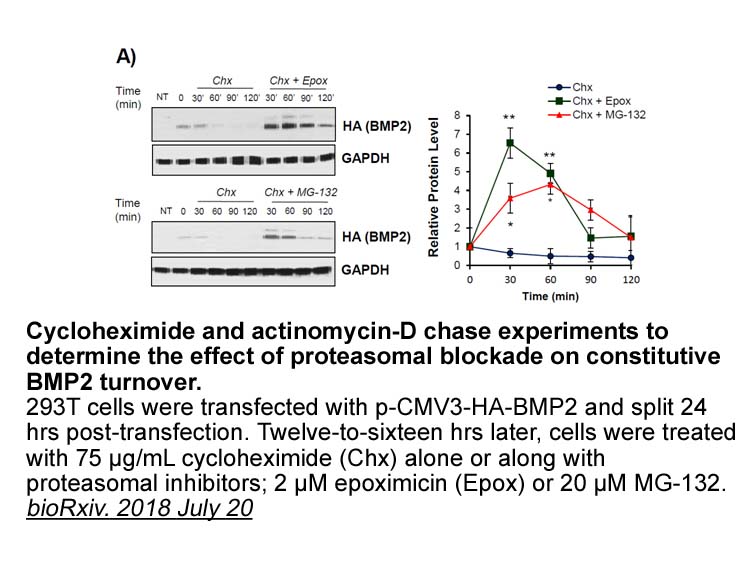
With a favorable spectrum of CRTh2 dependent in vitro and in vivo efficacy demonstrated, the off-target activity of compound 18 was investigated, first against a panel of prostanoid receptors and related eicosanoid targets (Table 8), where no significant activities at 10μM concentration were found i
-
br Using the same sort of
2021-04-02
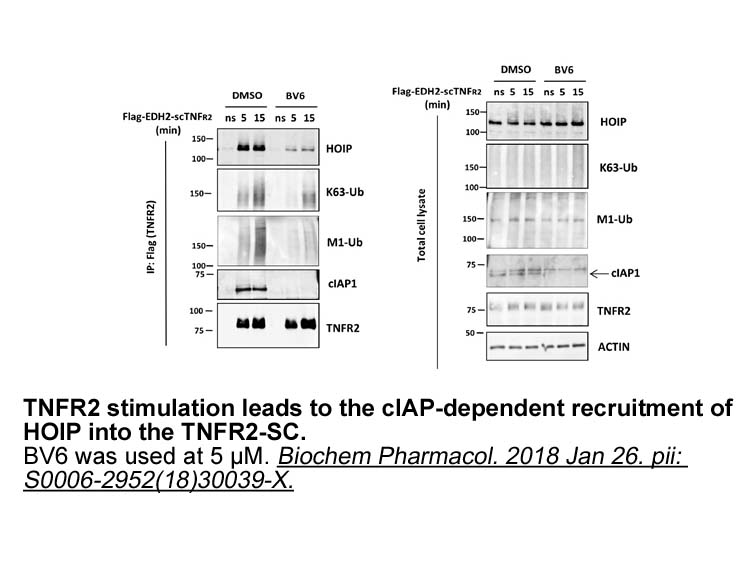
Using the same sort of methods, we can also address the proof of Theorem 1.2. The first part of the proof is made much easier if we use the “sieving” construction. Concretely, given a CMV operator , let denote the CMV operator with This induces a simple change in the spectrum; namely, if denotes
-
CK enzymes belong to a conserved family of serine
2021-04-02
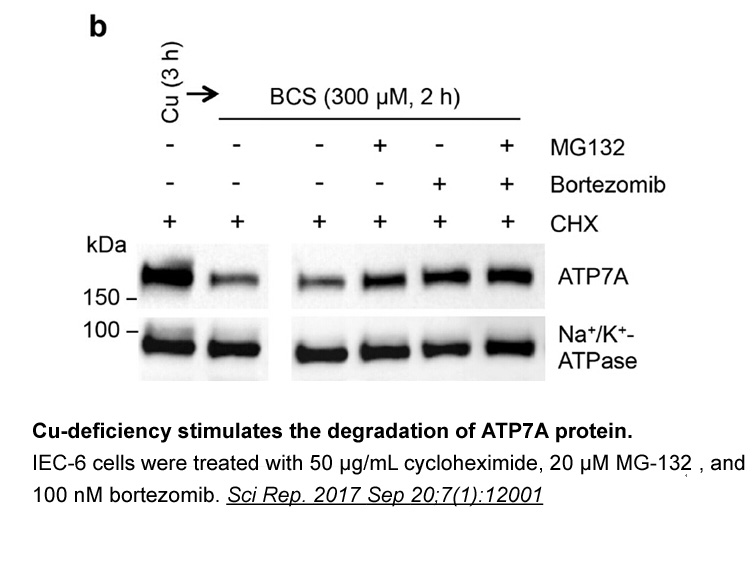
CK1 enzymes belong to a conserved family of serine/threonine protein kinases that plays an important and diverse role in vesicular trafficking, DNA repair, APETx2 progression and cytokinesis in organisms from yeast to humans [15]. In multicellular organisms CK1 enzymes also regulate developmental p
-
epinephrine adrenaline Our published results also show that
2021-04-01
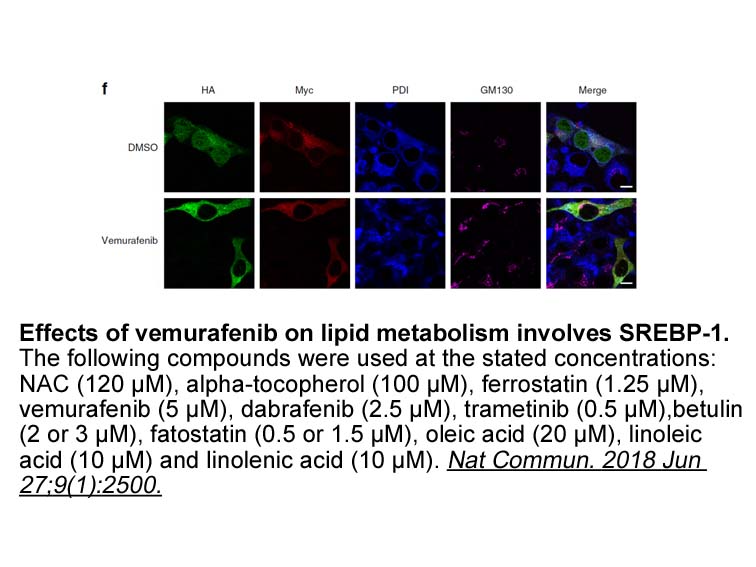
Our published results also show that the Y2 and the Y5, but not the Y1, receptors mediate NPY-induced excitation-secretion coupling in EECs (Abdel-Samad et al., 2012). Thus, it is highly important to consider controlling ET-1 circulating level via blockade of Y2 and/or Y5 receptor activation (Abdel-
-
br Effects of estradiol outside
2021-04-01

Effects of estradiol outside the nucleus are often mediated by classical estrogen receptors Today, it is widely accepted that steroid hormones can signal in ways that do not rely on receptors acting in the nucleus, including activation of receptors localized to the cellular membrane. Rapid effect
-
Metal ions are known not to
2021-04-01
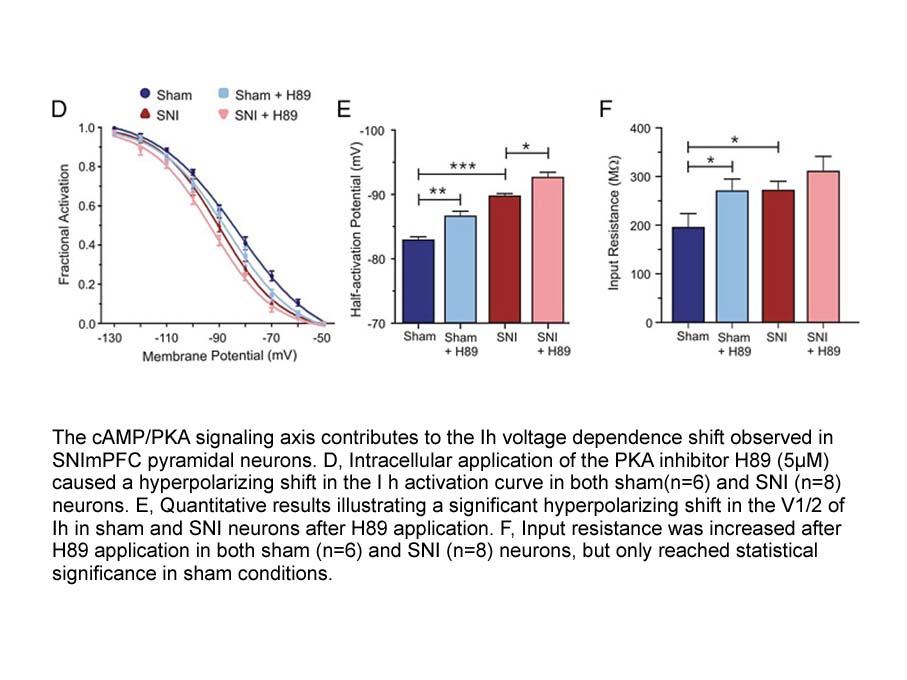
Metal ions are known not to be necessary for catalytic activity of serine proteinases. Nevertheless, Co2+ and Ca2+ ions were found to stabilize glutamyl endopeptidase molecule [1], [7], [19]. In our previous study, we have described significant stimulating effect of Ca2+, Mg2+, and Co2+ on biosynthe
-
At the therapeutic level the logical approach to
2021-04-01
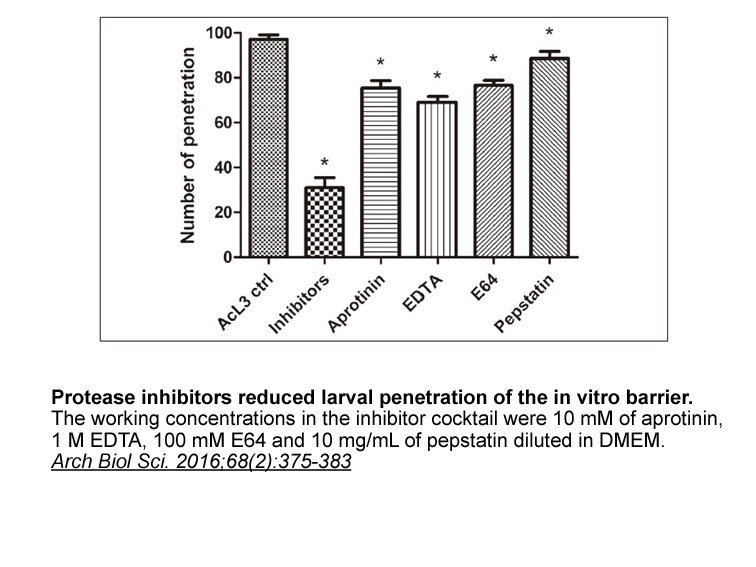
At the therapeutic level, the logical approach to address the cooperation between FGFR4 and EGFR was the combined inhibition of both receptors. To explore the potential efficacy and specificity of this approach, we tested the effect of FGFR and EGFR inhibitors in monotherapy or in combination in syn
-
FOX proteins constitute a large class of transcription facto
2021-04-01

FOX proteins constitute a large class of transcription factors with multiple functions, from development and organogenesis to regulation of metabolic and immune functions. The Fox transcription factor is characterized by a 100-amino-acid wing helix or forkhead DNA-binding domain. In addition, the FO
-
br Materials methods br Results
2021-04-01

Materials & methods Results and discussion The comparison of BFI methods (Table 1) shows that Phosphatesmo failed to detect seminal fluid in all samples. This observation is concordant with other studies that investigated water-exposed seminal fluid stains [6], [7]. The Phosphatesmo test is us
11556 records 400/771 page Previous Next First page 上5页 396397398399400 下5页 Last page