Archives
-
br STAR Methods br Acknowledgments The authors would
2022-02-11
STAR★Methods Acknowledgments The authors would like to acknowledge Genentech DNA Sequencing, Biologics Resource, Oligo, FACS, and Bioinformatics groups for their help with the project. Our thanks to Craig Cumming and Sophia Maund for facilitating our access to large-scale mutation data. We als
-
br Conclusions and future perspectives br
2022-02-11
Conclusions and future perspectives Declarations of interest Acknowledgements The authors thank Mrs. Kamala Pandey for the help in the preparation of this manuscript. This work was supported by NIH grants R01HL057531 and R01HL062147. Introduction Separation of short exons by long non-co
-
To characterize the basic functions of GPR in
2022-02-11
To characterize the basic functions of GPR84 in phagocytes, we have utilized the receptor selective antagonist GLPG1205 (a small selective antagonist of GPR84 developed by Galapagos NV [14]) together with ZQ16 (2-(hexylthio) pyrimidine-4,6-diol), a potent GPR84 selective agonist identified in a high
-
br Introduction br Mitochondrial dysfunction and cancer br L
2022-02-11
Introduction Mitochondrial dysfunction and cancer Lactate and succinate as oncometabolites Intracellular actions of lactate and succinate as tumor promoters Cell-surface receptors for lactate and succinate and their role in cancer GPR109A as the receptor for butyrate and β-hydroxybu
-
br The mode of binding of
2022-02-11
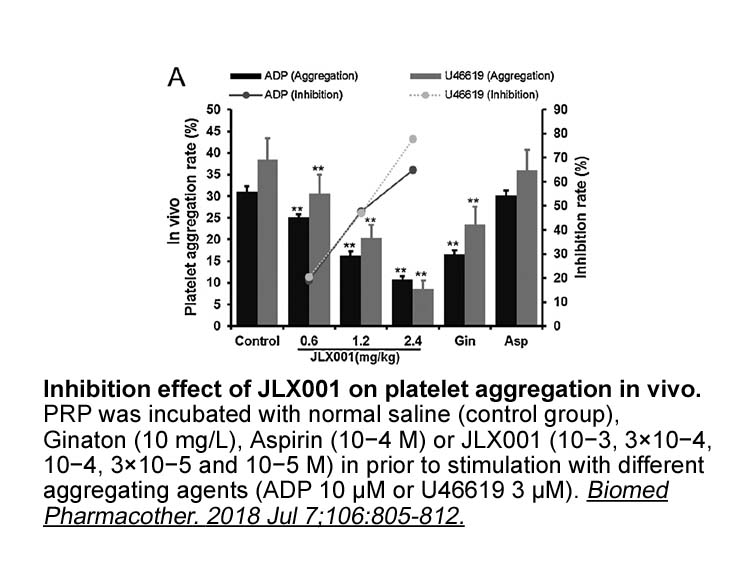
The mode of binding of ligands to GPR35 As noted above, although kynurenic BMS345541 hydrochloride is an agonist at GPR35, this is true for neither kynurenine [8] nor kynurenic acid ethyl ester [13]. This implicates a key role for the carboxylate group in binding and/or activation of GPR35. Impo
-
Rapid action of E on GnRH neurons has
2022-02-11

Rapid action of E2 on GnRH neurons has been known for some time. E2 hyperpolarizes guinea pig GnRH neurons, alters cAMP production in GT1-cells and stimulates or inhibits [Ca2+]i oscillations within 15 min (Lagrange et al., 1995; Navarro et al., 2003; Temple et al., 2004; Romanò et al., 2008). Impor
-
br Results and discussion A diverse set
2022-02-11
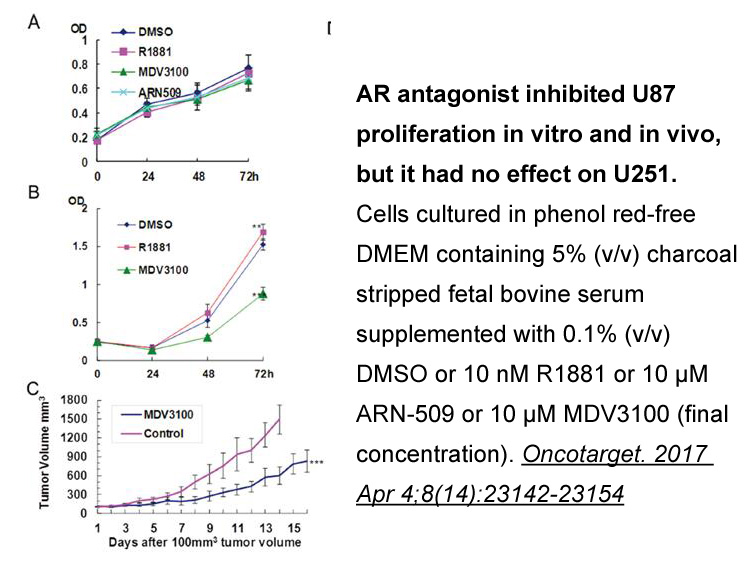
Results and discussion A diverse set of compounds were synthesized to improve the PK and physicochemical properties of 2. Compounds' agonist effects on hGPR40 were assessed by calcium mobilization assay using hGPR40-HEK293 cell line which stably expressed human GPR40. Preliminary explorations fo
-
With the advent of genome sequencing hexokinase gene
2022-02-11
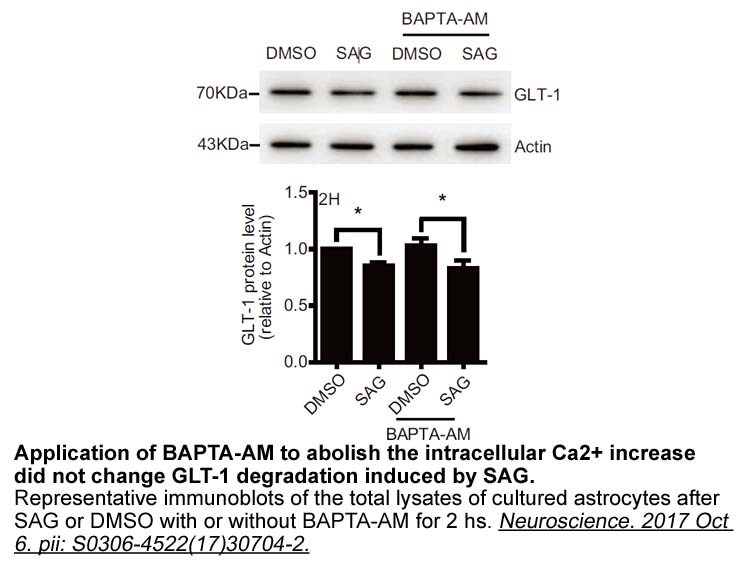
With the advent of genome sequencing, hexokinase gene sequences are now available from a far greater number of vertebrate species, as well as from diverse non-vertebrate animal species. As indicated above, searches of vertebrate genome sequences revealed the existence of a novel fifth member of the
-
WM-2474 The mechanism by which Piezo acts in the regulation
2022-02-11
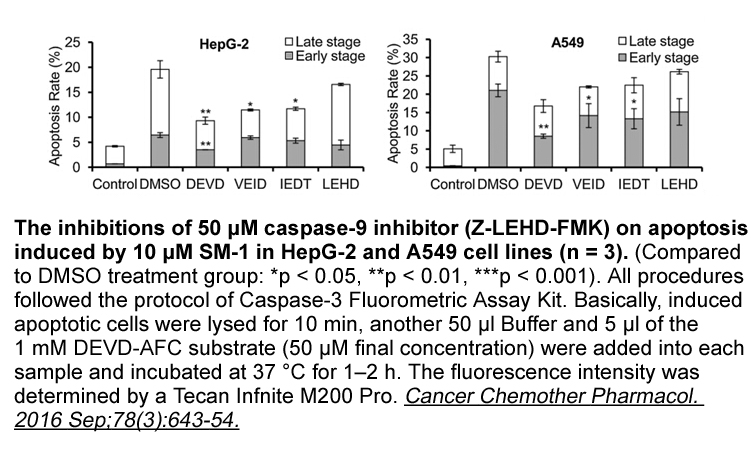
The mechanism by which Piezo1 acts in the regulation of RBC volume is not firmly established. Its curved structure implies that it is activated by an increase in membrane tension (11), a mechanism indicated by electrophysiological measurements (16). However, the RBC membrane mechanics at its physiol
-
The synthesis of compounds and were
2022-02-10
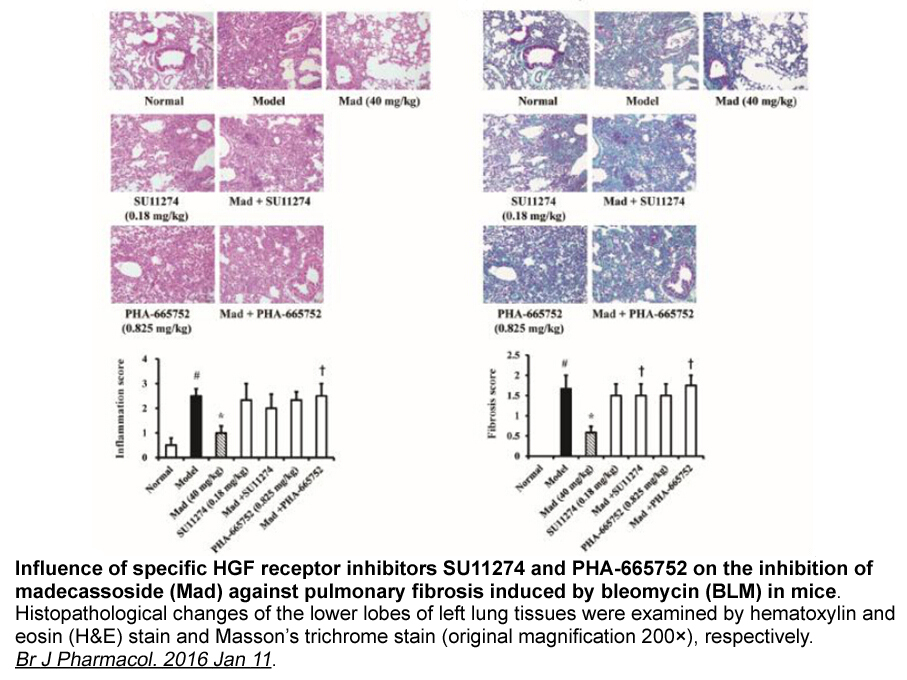
The synthesis of compounds and were achieved according to standard procedures. As shown in , The compound 4-methyl-1-(4-sulfobutyl)quinolonium () was prepared by alkylation reaction. Compounds and were synthesized by substitution reactions between 4-fluorobenzaldehyde and , , '-trimethylethanedi
-
In summary the SAR of a series of
2022-02-10
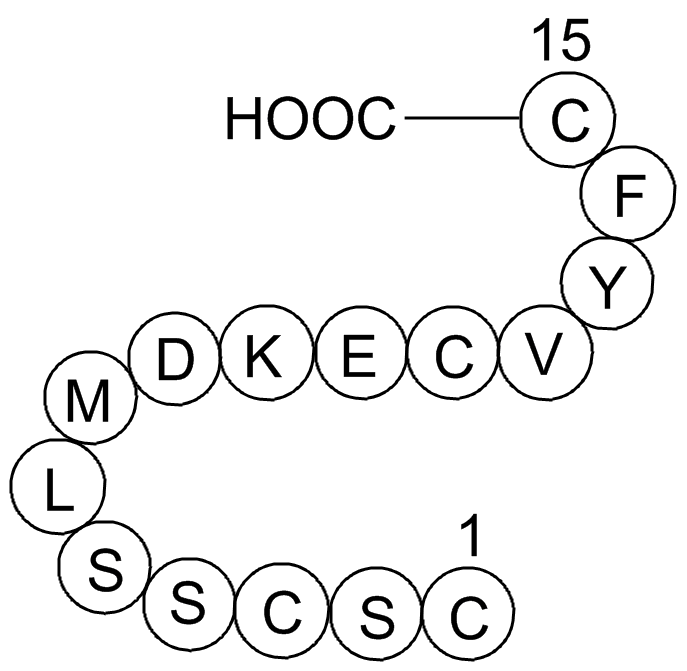
In summary, the SAR of a series of phenylpropanoic acid-free fatty D-Pantothenic acid sale receptor agonists is described which resulted in the identification of potent FFA4 agonists. The superior pharmacokinetic properties of compound led to its selection as an in vivo tool compound which afforde
-
Introduction RNA splicing occurs in the
2022-02-10
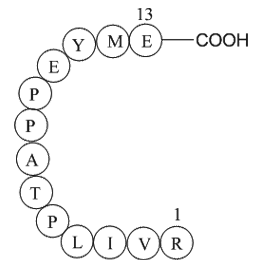
Introduction RNA splicing occurs in the nucleus when noncoding sequences (introns) are removed from the pre-mRNA transcript and coding sequences (exons) are joined to form a mature mRNA [1,2]. This reaction is catalyzed by a multiprotein complex called spliceosome. The spliceosome consists of five
-
br Funding The research for
2022-02-10
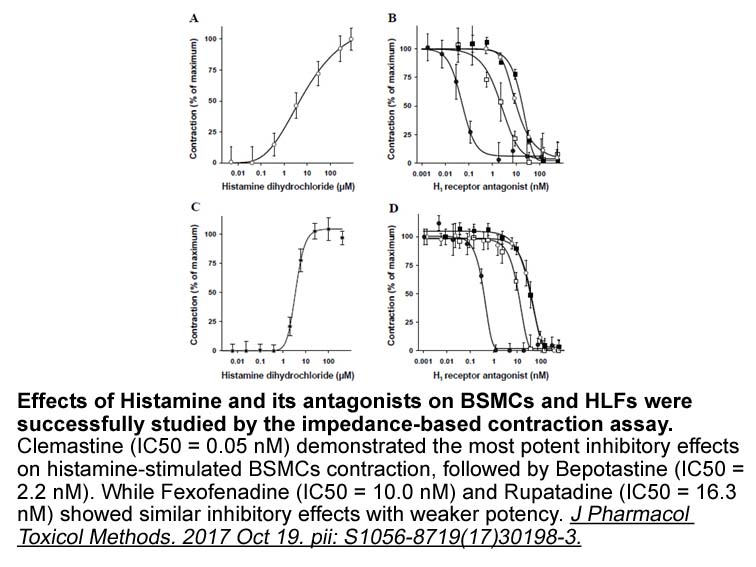
Funding The research for this paper is conducted as part of a PhD thesis at Pasteur Institute of Iran and it was financially supported by Pasteur Institute of Iran and the Iranian Centre for Communicable Diseases. Conflict of interest Acknowledgments Introduction The viral enzyme integr
-
br Conclusions br Acknowledgements This work was supported
2022-02-10
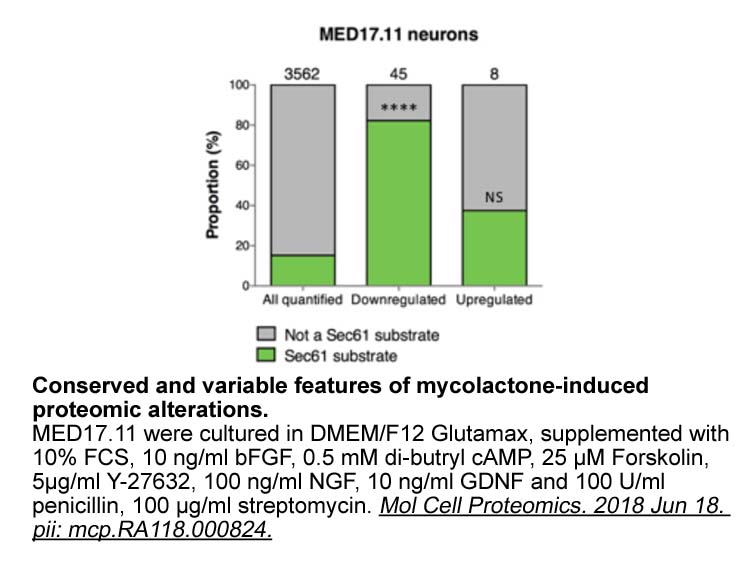
Conclusions Acknowledgements This work was supported by grants from the Polish National Science Center: 2014/14/E/NZ1/00139 (to A. Jazwa-Kusior) and 2015/17/N/NZ1/00041 (to M. Tomczyk) and National Centre for Research and Development (STRATEGMED2/269415/11/NCBR/2015) (to J. Dulak). Faculty of
-
br Effect http www apexbt com
2022-02-10
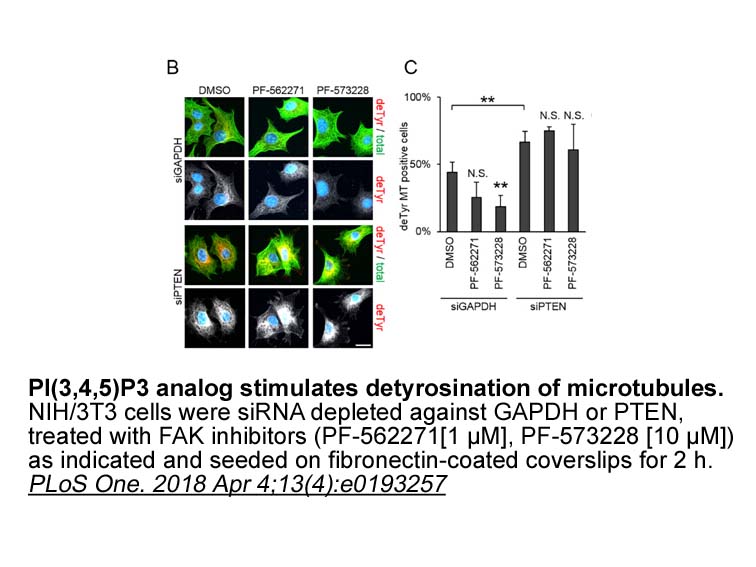
Effect of HDACi on Proteasomal Regulation of IκBα and p65 Levels At the transcriptional level, expression of CXCL8, as well as many other proinflammatory chemokines, is regulated by the transcription factor NFκB, which is constitutively activated in solid cancers, including OC, lung, and breast c
3637 records 220/243 page Previous Next First page 上5页 216217218219220 下5页 Last page